
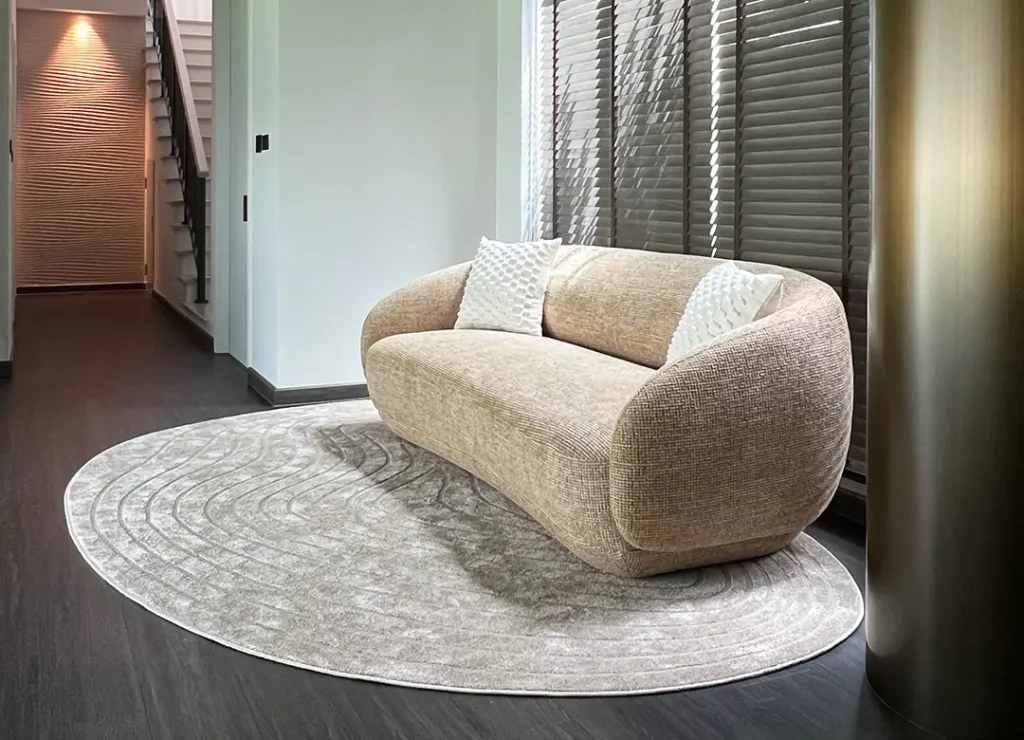
When stepping into a modern luxury residence, the first impression isn’t created by loose furniture or artwork—it is defined by the architectural rhythm of the space itself. For decades, contemporary interior design was dominated by strict grid lines, sharp 90-degree angles, and rigid rectangular layouts. While clean and minimal, these angular geometry choices can make high-end homes feel cold, static, and overly clinical.
Today, luxury residential design is undergoing a major evolution toward Curved Architecture in Interior Design and Fluid Architecture. From sweeping entrance corridors and fluted feature walls to softly rounded custom joinery, organic curves are redefining high-end living. Incorporating soft edges creates a sense of continuous spatial flow, turning functional floor plans into sculptured, serene living environments.
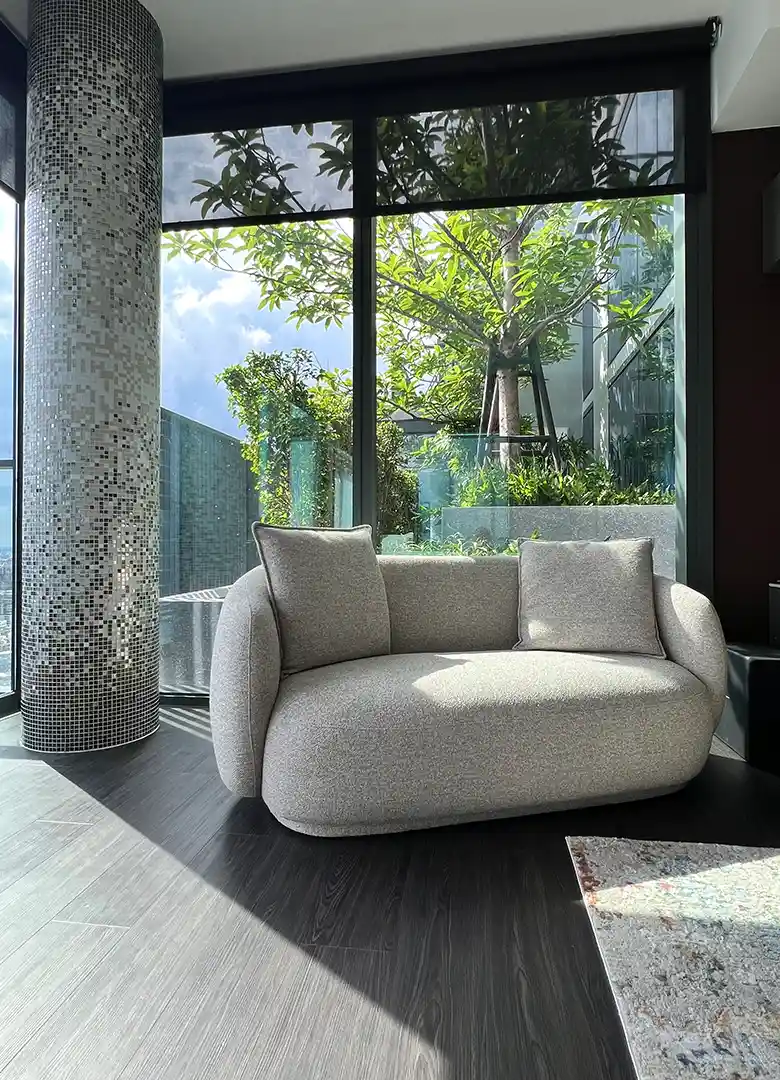
The Psychology of the Curve: Why Soft Edges Redefine Spatial Comfort
Human perception responds naturally to organic forms. In the natural world, sharp 90-degree corners rarely exist; instead, our visual environment is filled with soft contours, wave patterns, and natural radii.
Spatial Impact: Traditional vs. Fluid Layouts
-
Visual Direction & Movement
-
Traditional Angular Layouts: Create sharp visual stop-points and force abrupt changes in sightlines.
-
Fluid Architectural Curves: Direct sightlines continuously around corners, guiding foot traffic effortlessly.
-
-
Foyer & Transition Handling
-
Traditional Angular Layouts: Accentuate narrow corridors and leave tight, awkward spatial dead zones.
-
Fluid Architectural Curves: Soften tight spatial transitions and open up foyer entrances visually.
-
-
Light & Shadow Behavior
-
Traditional Angular Layouts: Produce direct, harsh light reflections and sharp shadow lines across flat drywall.
-
Fluid Architectural Curves: Diffuse ambient light into soft, continuous gradients across the wall surface.
-
-
Overall Spatial Vibe
-
Traditional Angular Layouts: Feel formal, rigid, structural, and static.
-
Fluid Architectural Curves: Feel inviting, organic, sculptured, and visually calming.
-
When introduced into high-end residential interiors, curved architectural elements serve three distinct functional and psychological purposes:
-
Guiding Intuitive Movement: Instead of forcing a hard visual and physical stop at a corner, a curved wall naturally guides the eye and foot traffic smoothly from one functional zone to the next.
-
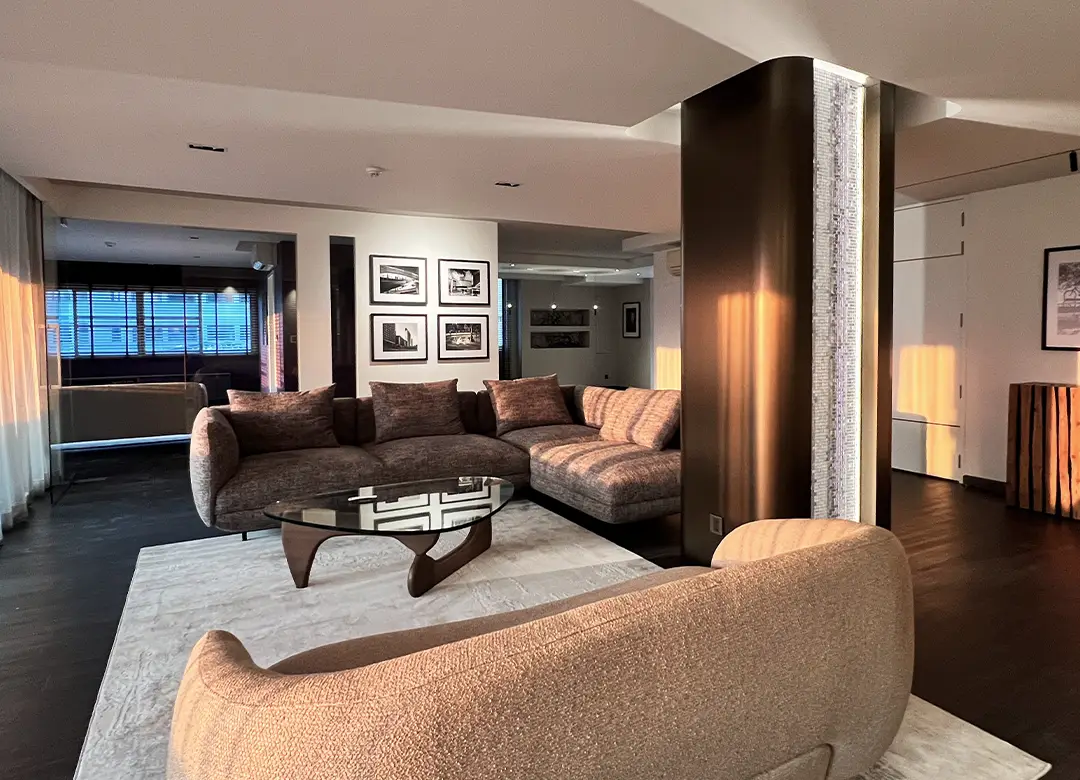
Soften Rigid Structural Columns: Luxury high-rise condominiums frequently feature intrusive structural concrete columns and boxed utility shafts. Encasing these elements in curved architectural cladding transforms structural obstacles into intentional design features.
-
Enhancing Ambient Light Diffusion: Curved plaster surfaces and textured wallcoverings catch natural and artificial light gradually. Instead of creating harsh light-and-shadow lines across flat drywall, curved surfaces create soft, elegant light gradients.
Master Sculptors of the Curve: Global Pioneers of Fluid Design
The move toward fluid forms is not just a passing interior trend; it is inspired by some of the most visionary names in modern architecture and product design. Iconic designer Karim Rashid has built an entire design philosophy around “blobjectivity” and soft, organic shapes, demonstrating how sensual curves can inject human emotion and vibrancy into everyday spaces. On an architectural scale, late legend Zaha Hadid redefined global skylines through radical, sweeping fluid geometries—proving that buildings can mimic natural landscapes rather than rigid grids. Similarly, master architects like Frank Gehry and legendary Italian brand Kartell have long championed the use of molded curves and dynamic contours to create pieces that feel alive, sculptural, and inherently luxurious. By bringing these organic design principles into residential interiors, custom homes evolve from static living environments into fluid, sculptural sanctuaries.
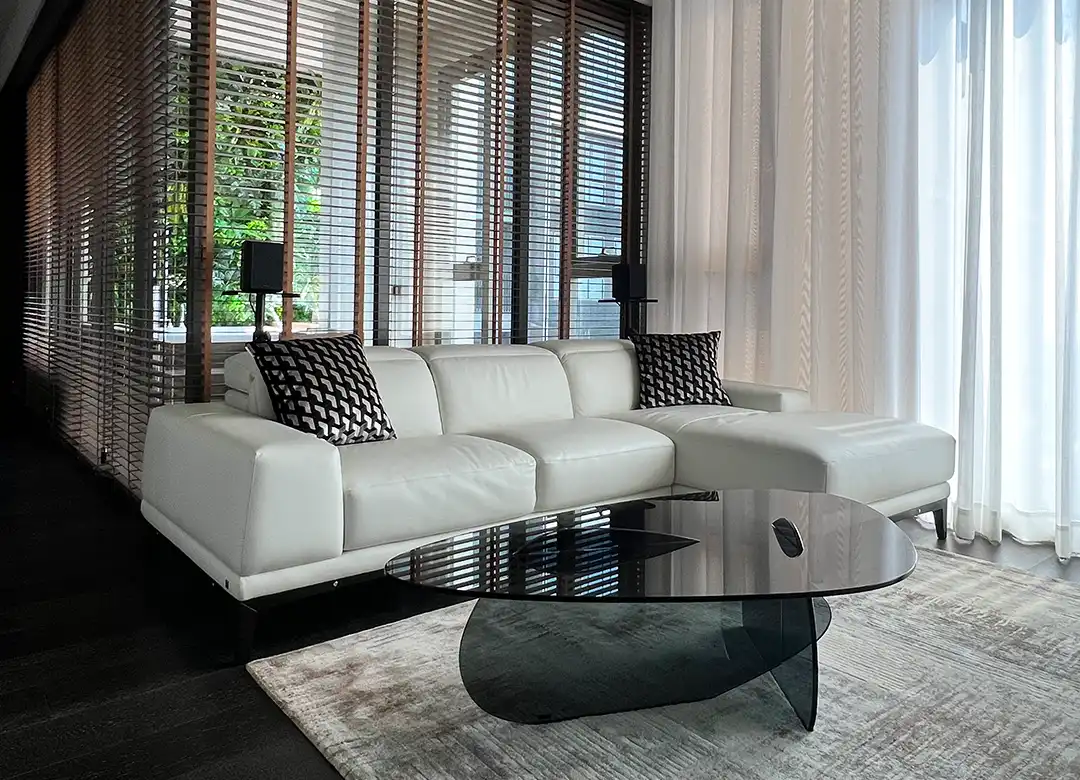
Architectural Applications: Integrating Curved Architecture in Interior Design and Fluid Elements Across the Home
Incorporating Curved Architecture in Interior Design into a luxury residence requires a balanced, intentional approach. Rather than applying rounded forms everywhere, fluid architecture works best when strategic surfaces are chosen to enhance spatial flow.
How Fluid Elements Connect Key Living Zones
-
Curved Foyer Wall: Creates seamless visual and spatial transitions from private entrance lobbies straight into the open-plan living area.
-
Recessed Cove Lighting: Projects a soft, shadowless glow downwards over organic curves, highlighting tactile wall textures.
-
Custom Curved Joinery: Integrates smooth fluted timber cladding, satin laminate, and FENIX surfaces directly into function-driven cabinetry.
-
Tactile Wall Finishes: Wraps Venetian plaster, micro-cement, or natural stone continuously around structural bends without unsightly seam lines.
1. The Entrance Foyer & Transition Corridors
The entrance foyer sets the tone for the entire home. In many high-rise layouts, private elevator lobbies and entrance halls can feel narrow or restrictive. Replacing sharp drywall corners with sweeping curved feature walls creates an immediate, welcoming sense of arrival.
-
Eradicating Dead Zones: Smooth wall transitions eliminate tight, unused corners, making entryways feel significantly larger and brighter.
-
Integrated Corridor Niches: A curved wall can easily incorporate a recessed, retro-lit display niche for artwork or sculptures without projecting into the walking path.
2. Custom Curved Joinery & Island Architecture
Fluid design extends far beyond drywall and masonry. Custom millwork allows curves to be integrated into functional furniture and cabinetry:
-
Curved Kitchen Islands: Rounding the ends of a central kitchen island creates an inviting, social atmosphere during gatherings while removing sharp corners in high-traffic kitchen prep zones.
-
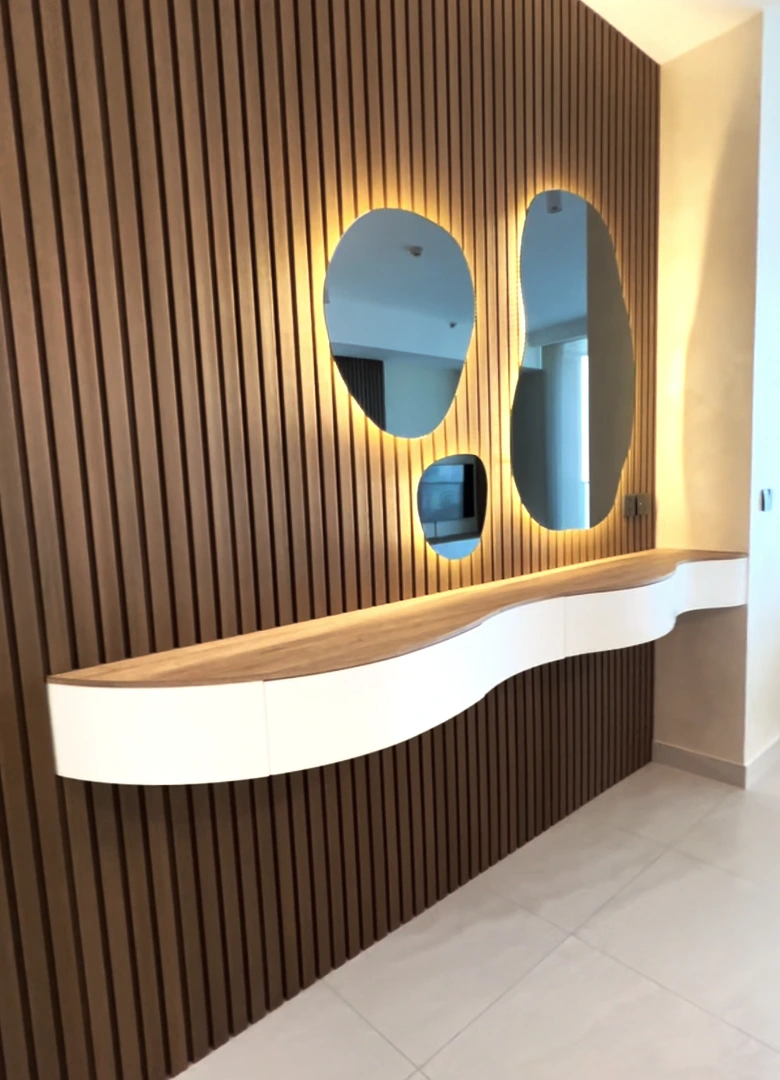
Custom Entrance Wall Shelving: Floating curved entry shelves with integrated drawers provide seamless storage for keys and everyday items while maintaining a sculptural, fluid profile.
-
Floating Curved Bathroom Vanities: Softly rounded vanity cabinets paired with custom-cut quartz or natural stone tops soften the hard tile surfaces typical of luxury master bathrooms. Mirrors, for instance, play also an important decorative role
- Organic & Backlit Bathroom Mirrors: Custom-shaped organic mirrors with concealed rear LED illumination instantly break up the rigid vertical tile lines typical of luxury bathrooms. Beyond providing functional task lighting, these sculptural glass elements create an inviting, spa-like atmosphere. To explore how high-end sanitary fixtures and modern layouts are redesigning wet areas in Thailand, read our feature on how Bangkok bathrooms are getting a modern makeover.
3. Fluted Paneling & Tactile Feature Walls
To accentuate a curved wall surface, introducing vertical texture adds exceptional depth and sophistication. Fluted timber cladding, flexible acoustic paneling, and micro-cement textures catch light across the curve, creating a dynamic visual feature that draws the eye upward to emphasize ceiling height.
Material Engineering: How Architectural Curves Are Built
Achieving a perfectly smooth, flawless curve requires specialized material selection, advanced construction techniques, and precision craftsmanship.
A. Flexible Sub-Bases & Curved Drywall Framing
Standard drywall cannot bend into tight radii without cracking or developing flat facets. To construct durable curved walls and ceiling bulkheads, interior architects utilize:
-
Flexible Bendable Plywood & Gypsum Board: Specially engineered thin-core panels designed to bend smoothly around curved timber or light-gauge steel stud framing.
-
CNC-Milled Sub-Frames: Precision computer-cut wooden ribs that establish the exact radius before cladding, ensuring absolute symmetry along the curve.
B. High-Performance Surface Materials for Curved Joinery
When crafting curved cabinetry and custom furniture fronts, materials must offer both flexibility and durability:
-
FENIX & High-Pressure Laminates: Ultra-matte, anti-fingerprint laminates that can be thermoformed around tight door radii for kitchen islands and vanity units.
-
Bent Timber & Wood Veneers: Using multi-layer vacuum pressing, natural wood veneers are molded into custom curved paneling for headboards, wardrobes, and TV feature walls.
-
Italian Venetian Plaster & Micro-Cement: Seamless, trowel-applied mineral plasters that wrap continuously around curved walls without a single visible seam or joint line.
- Bespoke Metal Cladding: Precision-bent stainless steel with many steel finishing options to choose from, designed to transform intrusive concrete columns into sleek, architectural feature pillars with a soft radius.
Lighting the Curve: Layering Light Along Organic Surfaces
Illuminating a curved surface requires a completely different approach than lighting flat, angular walls. Incorrect light placement can flatten the curve or create awkward hot spots.
1. Recessed Ceiling Cove Lighting
Installing a continuous LED strip within a dropped ceiling cove directly above a curved wall creates a soft, downward wash of light. This accentuates the wall’s contour and casts gentle, shadowless gradients across the surface finish.
2. Architectural Wall-Washing
Positioning linear wall-washer spotlights 20 to 30 cm away from a fluted or textured curved wall highlights the relief pattern. As the light grazes across the vertical grooves, it creates a rich play of light and shadow that changes as you move through the room.
3. Integrated Skirting & Under-Cabinet Strip Lights
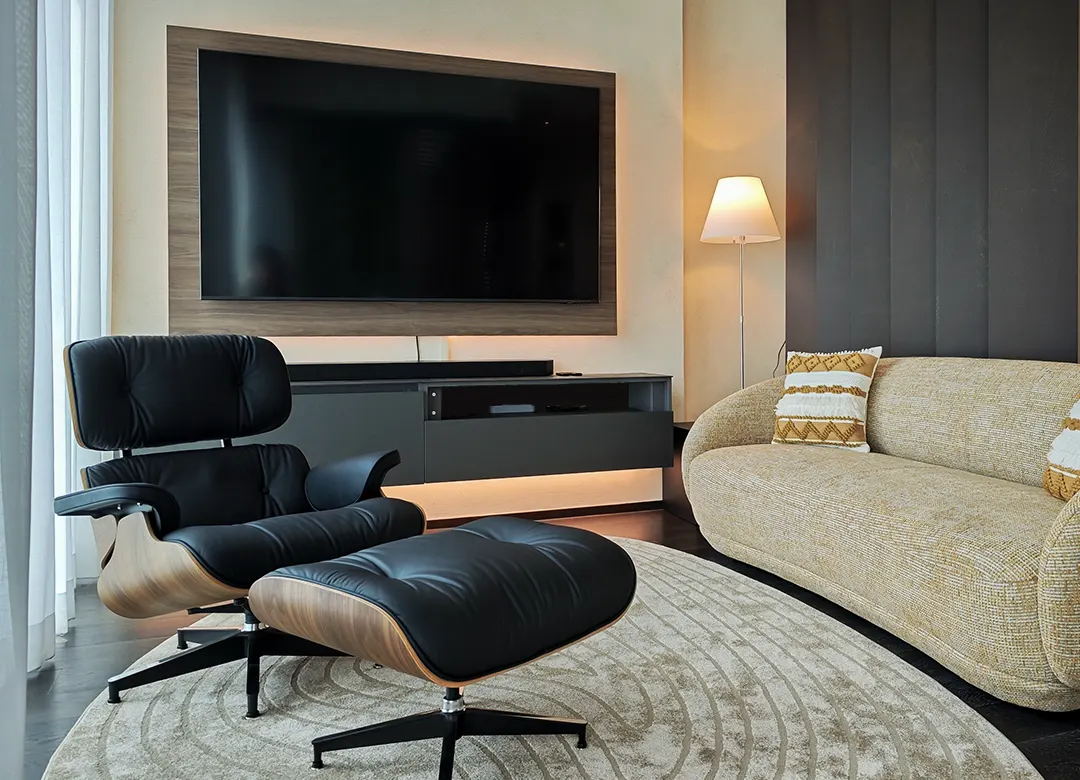
Adding concealed LED illumination beneath floating curved joinery—such as a rounded entrance console or floating bathroom vanity—makes the heavy joinery appear weightless, floating effortlessly off the floor.
Transforming Space Through Fluid Design
Curved Architecture in Interior Design and fluid architecture is far more than a passing interior trend; it is a fundamental shift toward creating homes that feel harmonious, spacious, and deeply comfortable. By replacing rigid angles with soft contours, custom joinery, and tailored lighting, luxury residences achieve a rare balance of architectural precision and organic warmth.
At Elementi Interiors, we specialize in bespoke architectural solutions, custom joinery, and complete residential renovations across Bangkok. Contact our team to discover how fluid spatial design can transform your home.

